
What Is Phased Workforce Camp Deployment?
Phased workforce camp deployment is a single-contract lodging project in which Cotton OneLodge houses your crews in a mobile camp within the first 30 days, expands into a semi-permanent camp as construction ramps up and turns over a permanent lodge by day 365. One operator runs every phase, so your beds never go dark.
Large projects rarely get to choose their timing. The workforce shows up months before a permanent lodge could be finished, and the headcount keeps climbing after it opens. OneLodge closes that gap with one project built to grow alongside your project.

Your Project Needs Beds Now and a Lodge Later
Most providers make you pick one. Hotels and trailers are fast but can't carry a 12- to 36-month build. A permanent lodge fits the long haul but takes most of a year to design, permit and build. Buy the phases from separate vendors and you get separate contracts, a second mobilization and a hand-off window where crews can end up without a bed.
A gap like that costs you build time. Crews commute farther, turnover climbs and your site team spends its time managing lodging vendors instead of the build. Phased deployment removes the hand-off by keeping one operator responsible for every night of occupancy from the first bed to the last.
The Day-Count Timeline for Phased Workforce Camp Deployment
Every program is sized to your site, permits and headcount curve. The structure below is the model Cotton plans against.
| Phase | Days | Camp Type | What Your Crews Have | What Is Being Built |
|---|---|---|---|---|
| 1 | 1 to 30 | Mobile crew camp | Beds, showers, restrooms, laundry, dining, power and water | Site pad, utilities and the semi-permanent layout |
| 2 | 30 to 180 | Semi-permanent camp | 7x7 private-room units, dining hall, laundry, rec room | Permanent lodge buildings and buried utilities |
| 3 | 180 to 365 | Permanent lodge | Full amenities, 24-hour front desk, fitness center | Mobile units demobilize or stay on for peak headcount |
Day 1 to 30: Mobile Crew Camps Put Crews in Beds
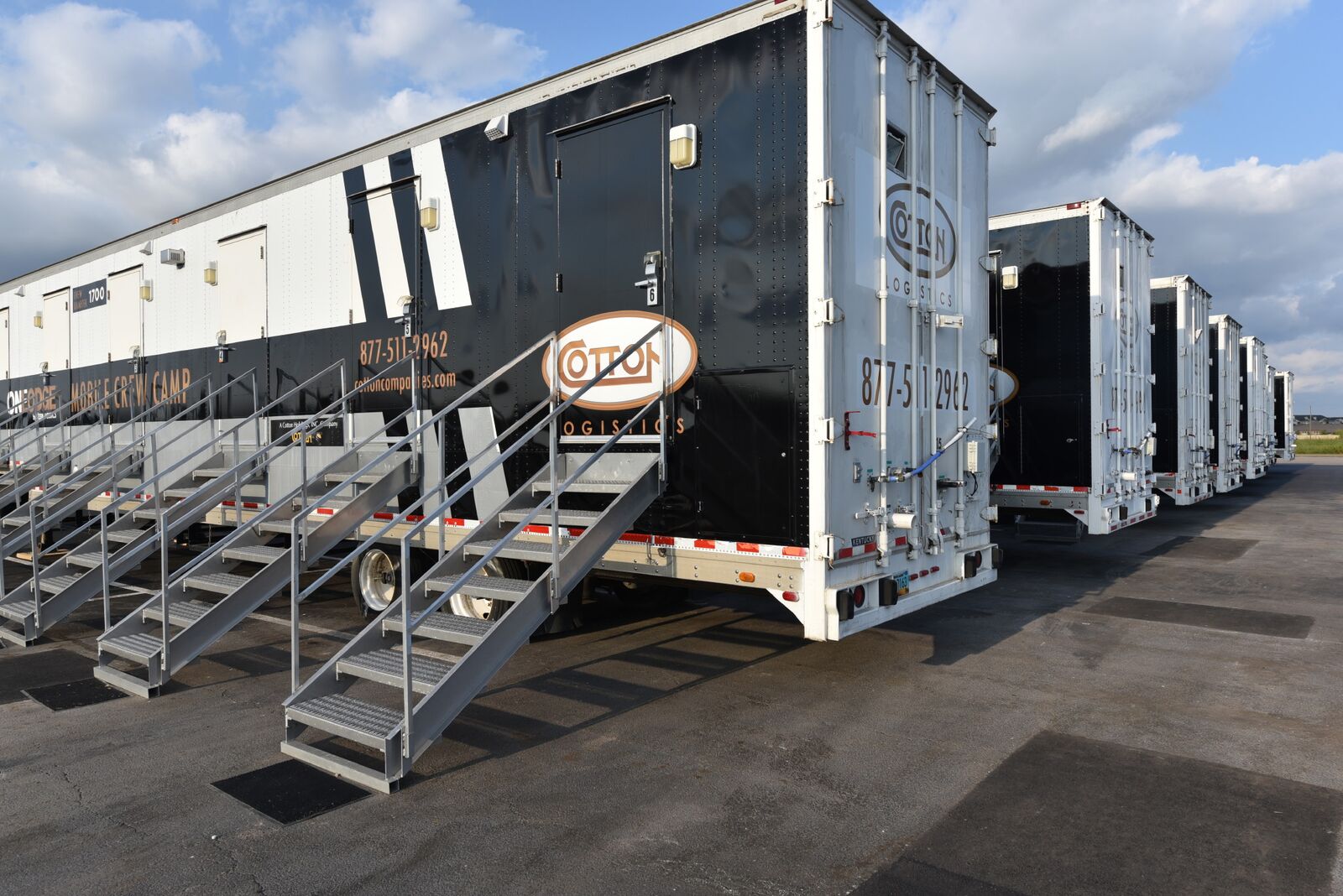
The first phase runs on Cotton's owned fleet. Mobile crew camps arrive as 53-foot trailers on wheels or skids, pulled by semi-tractor and paired with restroom, shower, laundry and kitchen trailers plus dining structures. Power, potable water and wastewater service come in the same mobilization.
Cotton has run this phase under pressure. After a Category 4 hurricane in Southwest Louisiana, the first 306 beds were installed and connected 96 hours after contract approval. Our rapid deployment housing work follows the same playbook.
Day 30 to 180: Semi-Permanent Build-Out While Crews Stay Housed
With crews already sleeping on site, the camp grows around them. Semi-permanent camps use Cotton's manufactured 7x7 unit: seven private rooms and seven bathrooms per unit, with single beds instead of bunks. A dining hall, laundry facility, rec room and fitness center come online as headcount climbs.
New units go up next to occupied ones, so no one gives up a room while construction happens a row over.
Day 180 to 365: Permanent Lodge With No Gap in Occupancy
The permanent lodge rises on the same site plan. Utility lines are buried, and walkways, covered decks and landscaping go in, so the lodge works like a community and doesn't feel like an overnight setup. Crews move over building by building. Mobile units then either return to Cotton's fleet or stay in place to absorb a headcount peak.
One Contract, One Operator: Why It Matters to Your Budget
Plenty of companies can deliver units. Cotton runs the community that lives in them. Most competing offers sell each phase as its own product with its own paperwork. A single OneLodge contract covers the whole arc:
- One procurement cycle. Your team scopes, negotiates and approves once, not three times.
- One mobilization team. The same people who stand up the mobile camp plan the permanent lodge, so the site layout is designed for the transition from day one.
- No hand-off window. Occupancy stays with one operator from the first night to the last, with no gap between vendors.
- The same on-site staff. Housekeeping, laundry, security and camp management stay consistent, which helps keep your crews on the project.
- Fleet-owned assets. Cotton owns the units it deploys, so phase one does not wait on a subcontractor's availability.
- Food included. Dining in every phase is provided by Cotton Culinary, our sister company, under the same program.
Where Temporary to Permanent Workforce Housing Fits
Phased deployment is built for projects where the workforce arrives fast and stays for years. It lines up with the four sectors driving large-scale construction in Cotton's markets:
- Data centers: hyperscale campuses that mobilize thousands of workers in markets without lodging capacity.
- Mining and minerals: remote sites where expansion crews need beds long before permanent housing exists.
- Nuclear and critical infrastructure: outage, refurbishment and new-build programs with long timelines and strict site controls.
- DOD and energy-funded projects: federal programs that need a single accountable contractor for the full term.
In each of these sectors, temporary to permanent workforce housing under one operator replaces a chain of short-term fixes with a single plan that follows the project schedule.
Proof From 30 Years of Deployment
Cotton has been providing critical solutions since 1996, beginning in disaster response. The record behind this program:
- 96 hours from contract approval to 306 beds installed and connected after a Category 4 hurricane. See the hurricane responder camp case study.
- 16 days to put 1,306 private-room modular units into operation for that same response, work that typically takes more than 120 days.
- 80 beds of mobile camp deployed in Carlsbad, New Mexico, as interim lodging for an oilfield service company while its permanent facility was under construction.
- GSA contract holder with a fleet Cotton owns and operates.
FAQs
How quickly can the first phase be operational?
It depends on site access, permits and headcount. For reference, Cotton installed and connected its first 306 beds 96 hours after contract approval during a Category 4 hurricane response. Your proposal will include a day-count schedule built for your site.
Do crews have to move out during the transition?
No. Semi-permanent units and permanent lodge buildings go up next to occupied housing. Crews move over in planned blocks, so occupancy stays continuous through every phase.
Can the program stop at the semi-permanent phase?
Yes. For projects running 12 to 36 months, a semi-permanent camp built from 7x7 private-room units can be the final configuration. The plan follows your schedule, not a fixed endpoint.
Is food included?
Yes. Dining is included in every phase and provided by Cotton Culinary, OneLodge's sister company, under the same program.
What does one contract cover?
Lodging, dining, housekeeping, laundry, recreation, security, crew transportation and camp management across all three phases, with one operator accountable for the whole program.
Plan Your Project's Day 1 to Day 365
Tell us your headcount curve, site location and schedule, and we will map a phased program to it, with a day-count timeline and one contract covering every phase.
Or call 877-900-2308.


