
Cotton OneLodge
Price Projector: Estimate Your Crew Lodging Costs
The Cotton OneLodge Price Projector gives you an initial, high-level project cost estimate for housing your crew. Enter your headcount, program length and camp type, and our free-to-use tool returns a total program estimate. Submit your project information for a more detailed discussion with Cotton.
Start Your Planning Estimate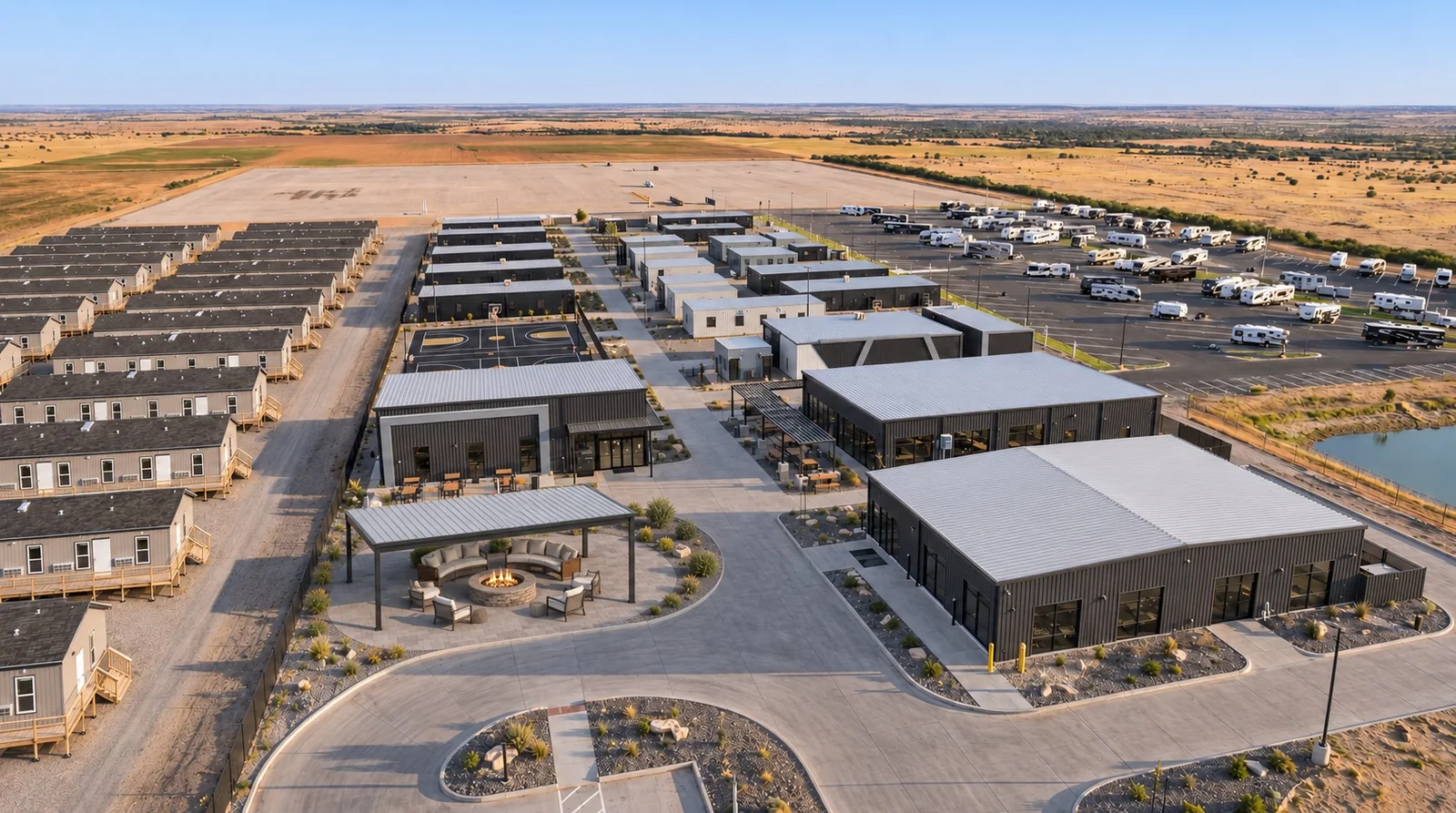
All-In Rate Explorer
Lodging, culinary operations and meals, utilities, power and fuel in one all-in rate. Set your crew size and contract term, compare lodging tiers, and we'll email your estimate.
Unlock your estimate and Cotton will reach out for a more detailed discussion.
 The projected price provided is a preliminary estimate and may change based on actual project requirements and scope.
- The high-level ROM estimate will be emailed.
What the Price Projector Needs
Each input maps to a real cost driver. The more accurate your answers, the tighter your range.

Peak crew headcount. Bed count sets the size of the camp and everything that scales with it: dining capacity, laundry volume, security staffing and parking.

Program length in months. Duration decides which camp type makes sense and how setup costs spread across the program.

Camp type. Choose your tier for your desired camp type, ranging from the essentials to our customized premium options.
What You Get Back

What’s Inside the Per-Person-Per-Day Number
Cotton prices camps as turnkey programs, so the per-person-per-day figure you're comparing covers more than a room. A standard OneLodge program includes:
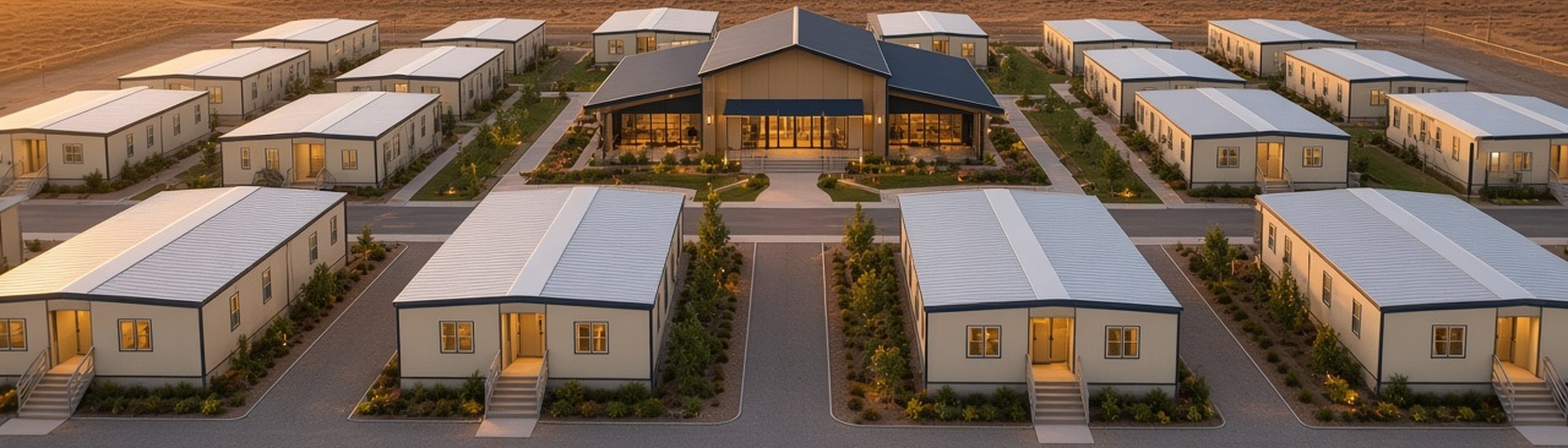
 Rooms: 100% single occupancy with full-size beds, a private ensuite bathroom, individual PTAC climate control and a streaming-enabled TV.
 Food: Included and provided by our sister company, Cotton Culinary, with multi-shift meal schedules matched to crew rotations.
 Housekeeping and laundry: Housekeeping twice weekly, linen exchange weekly, wash and fold with a 48-hour turnaround and janitorial service daily.
 Security: Perimeter fencing, controlled access gates, badge access and 24/7 security officers.
 Camp management: A Program Manager as your single point of accountability, supported by site, safety and quality staff.
What Happens After You Submit

Lodging costs shift with conditions a form can't see, such as utility access, site access and how fast headcount ramps. Your estimate is emailed to you so you can share it with your team, and a Cotton planner reviews it against your site. If you want a firm number, that review becomes the starting point for a proposal instead of a blank page.
The same team that reviews your estimate runs deployments on tight clocks:
- Modular housing on the ground within 96 hours of Notice to Proceed, including 306 beds for a government agency’s hurricane responder camp after a Category 4 storm.
- 200 operational beds within 30 days, with power, water, food, security and connectivity live from the first night.
The same team has been standing up camps since 1996 and is a GSA contract holder and owns the fleet it deploys. Learn more about OneLodge workforce lodging.
Get a Budget Number Before the First Call
Estimators need a lodging line long before the RFP goes out, and hotels are the easy default. The federal standard per diem for fiscal year 2027, effective Oct. 1, 2026, is $113 per night for lodging plus $68 for meals and incidentals. That's $181 per worker per day. For a 300-person crew on a 12-month program, per diem alone comes to about $19.8 million before commute time, turnover or rooms you can't find.
The bigger problem is supply. Abilene shows what happens when a hyperscale campus arrives: thousands of construction workers landed in a city with limited housing, and local rents rose nearly 50% in a single year. Once hotel blocks fill, crews commute from farther away, arrive later and quit sooner.
Hotels still make sense for small crews, short stays and urban sites. A camp usually wins at 100 or more workers, on remote sites and on jobs that run 90 days or longer. The Price Projector gives you a starting figure for the camp side of that comparison in minutes, without a sales call. For the full side-by-side, see our man camp vs hotel per diem breakdown.

FAQs
Is the Price Projector free?
Yes. There is no cost to use the tool or receive your estimate.
Is the estimate a quote?
No. It is a planning range for budgeting. Binding pricing comes in a written proposal after Cotton reviews your site and scope.
How is the estimate calculated?
It weighs headcount, program length, location, camp type, services and on-site utilities, the same drivers Cotton uses when pricing a camp.
How do camp costs compare to hotel per diem?
Hotel per diem covers a room and meals but not the commute, turnover or rooms that disappear when a large project comes to town. The federal standard rate for FY2027 is $181 per worker per day. Use the Price Projector to set a camp range next to that figure for your own crew size and schedule.
How fast can a camp be ready after I approve a proposal?
Cotton can have modular housing on the ground within 96 hours of Notice to Proceed and 200 operational beds within 30 days. Larger lodges are built in phases while crews are already housed.
Do workers share rooms or sleep in bunks?
No. OneLodge workers do not share rooms or sleep in bunks. Some round-the-clock operations put day- and night-shift workers in one shared bunk room. But every OneLodge room is single occupancy with a full-size bed, private ensuite bathroom, climate control and TV.
Ready for a Firm Number?
Skip the estimate and go straight to pricing.